 search
 search
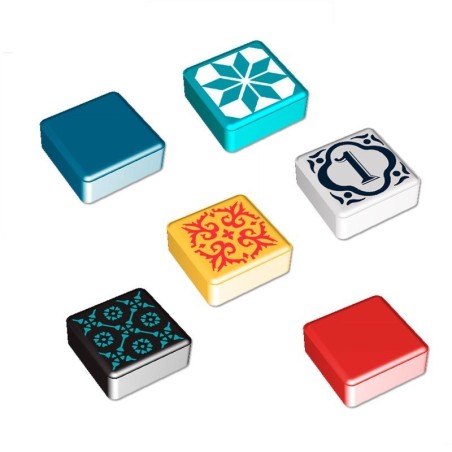 search
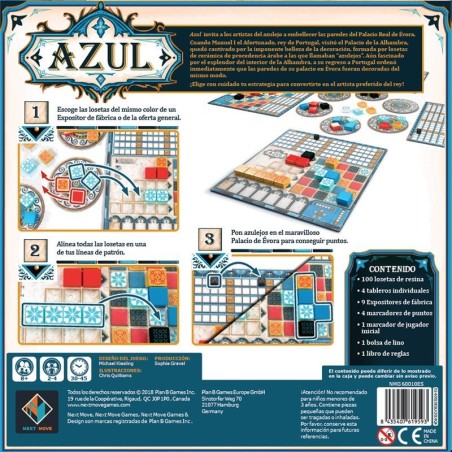 search



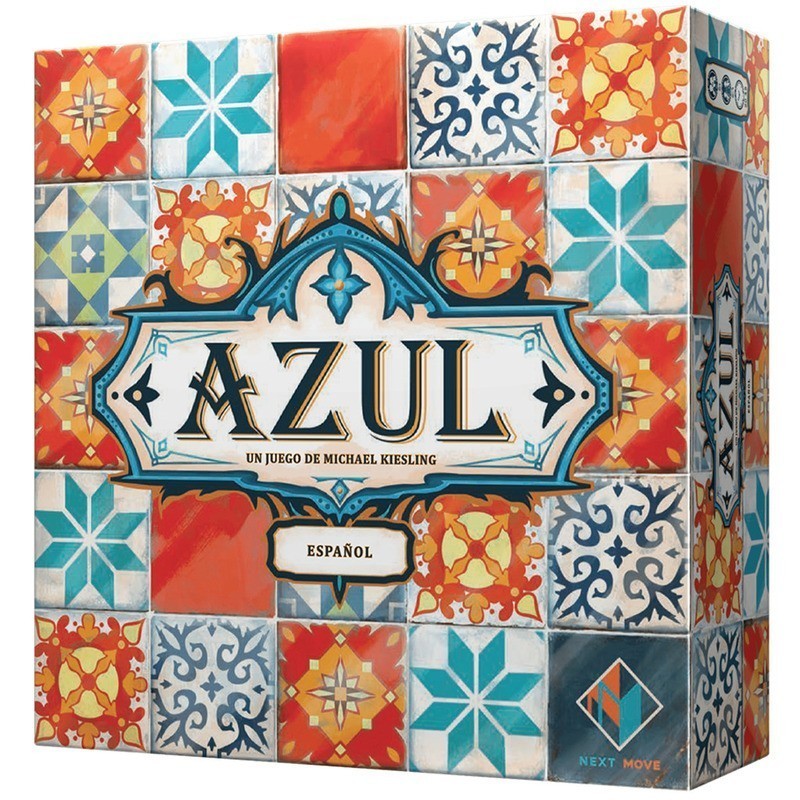
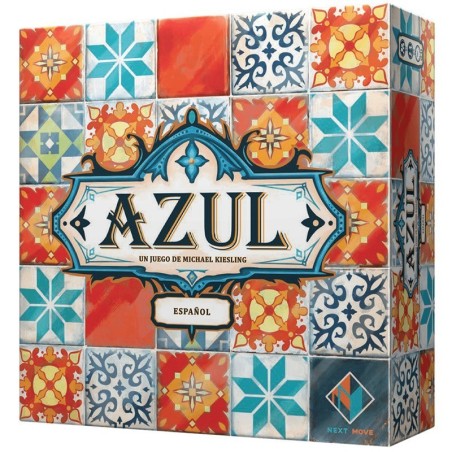
Azul is a strategic board game where players must create patterns by placing tiles.
Data sheet
Azul is an abstract board game that combines visual elegance and light strategic depth.
It is one of the best examples of an entry-level game to modern strategy, thanks to its accessible rules and its focus on pattern optimization.
Throughout the game, players compete to complete efficient mosaics, manage limited resources, and anticipate their opponents' decisions.
It is a title that stands out for its balance between simplicity and tactical depth.
Azul represents one of the main entry points to modern light-strategy games, where optimization, planning, and tactical decision-making are fundamental.
It sits as an intermediate step between family games and more structured strategy experiences.
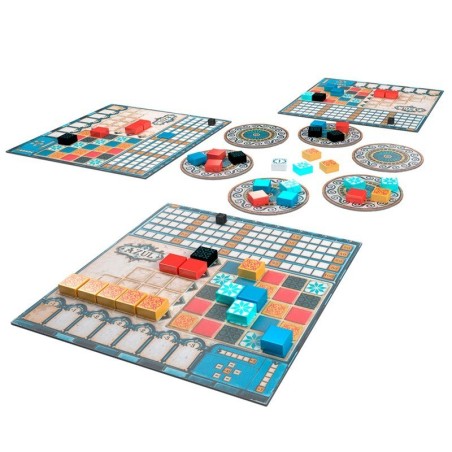
In Azul, players select colored tiles to complete patterns on their personal player board.
Each decision affects both your own score and the options available to the rest of the players.
The key to the game lies in planning, anticipation, and efficient space management.
The goal is to maximize your score by optimizing each placement round.
Azul is a tactical optimization game with indirect interaction, where every decision has an impact without the need for direct confrontation.
Compared to family games like Carcassonne, it introduces a greater demand for planning and calculating moves.
It is ideal for players looking to make the leap into strategy games without yet facing complex systems.
If you like Azul, you can try Carcassonne, a tile-placement game with greater interaction on the board.
The natural next step within modern strategy is 7 Wonders, which introduces the drafting system and civilization management.
For a more complex experience, Terraforming Mars represents the advanced level within strategy games.
Azul is an abstract optimization board game in which players compete to complete patterns on their own personal board.
Unlike other tile-placement games like Carcassonne, in Azul you do not build a shared map; instead, each player develops their own strategic composition.
It is a game that stands out for its visual elegance and its focus on individual planning and decision efficiency.
Azul represents the natural step from games with shared spatial interaction like Carcassonne, toward more abstract experiences centered on individual optimization.
While in Carcassonne players compete for control of a common map, in Azul the competition shifts to personal construction efficiency.
In Azul, players select colored tiles to complete patterns on their individual board.
Each decision involves managing limited resources and anticipating the future needs of one's own board.
The goal is to maximize the score by optimizing each placement.
Azul offers a light strategy experience focused on pure optimization, without direct interaction on a shared board.
Compared to Carcassonne, it reduces spatial interaction and eliminates competition for the same map, focusing on more abstract individual decisions.
It is ideal for players who have already mastered placement games and are looking for a cleaner level of strategy without direct conflict.
Carcassonne introduces shared spatial strategy, where players compete for control of the common map.
Azul evolves this concept by moving the strategy to an individual environment, where optimization and abstract planning replace direct interaction.
From here, the natural next step in complexity is 7 Wonders, where resource management and the drafting system appear.
Finally, Terraforming Mars introduces more complex strategic engine building.
If you like Azul, you can try Carcassonne, where the strategy develops on a shared map with greater interaction between players.
The natural next level is 7 Wonders, which introduces card and resource management through drafting.
For a deeper experience, Terraforming Mars represents advanced strategy based on engine building.
Azul is one of the most important games within modern light strategy due to its balance between accessibility, aesthetics, and tactical depth.
It is a key gateway into the world of strategic board games.
Be the first to ask a question about this product!
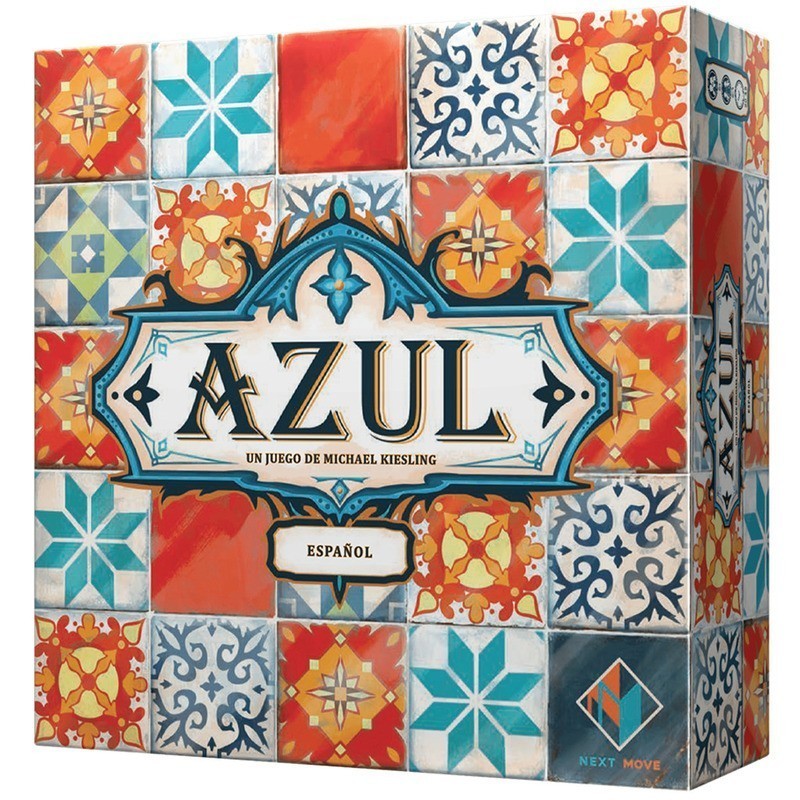
Azul is a strategic board game where players must create patterns by placing tiles.